
The Connection, Inc Blog
The Connection, Inc has been serving the New Jersey area since 1992, providing IT Support such as technical helpdesk support, computer support and consulting to small and medium-sized businesses.

A few years ago, renewing your cyber insurance policy was a simple task. You filled out a one-page form, checked a box stating you had an antivirus program installed, and mailed it back.
Those days are officially over.
0 Comments

Most business owners assume their company is too small to attract the attention of an active hacker. Cybercrime has evolved into an automated industry that constantly scans the internet for open vulnerabilities rather than specific brand names. Therefore, leaving your network unsecured effectively guarantees your systems will eventually be found.

Traditional office perimeters no longer protect modern networks now that many staff members are free to log in from home or local coffee shops. Granting automatic network access based on physical location creates quiet vulnerabilities that bad actors exploit daily.
This is exactly why verifying every identity and endpoint is so essential for anyone in business today: it safeguards your entire organization.

We all like to think we have a solid handle on our day-to-day operations, but technology has a sneaky way of creating blind spots. Even well-intentioned leaders occasionally fall into simple traps that put their operations at risk. Let’s look at a few of the most easily avoidable IT mistakes and how you can fix them today.
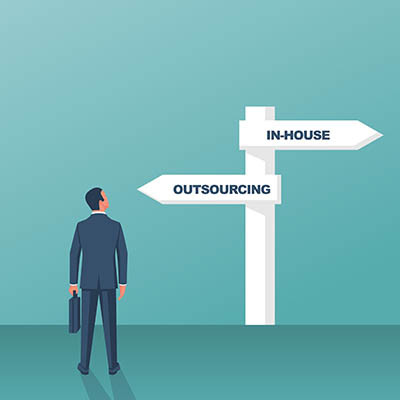
Building an internal IT department seems straightforward until you start doing the math on what it actually costs to maintain. When business owners evaluate their technology support, the natural instinct is to compare an employee’s salary directly against a monthly managed service invoice.
However, comparing a single line-item salary to a full-service partner leaves out most of the actual financial picture.
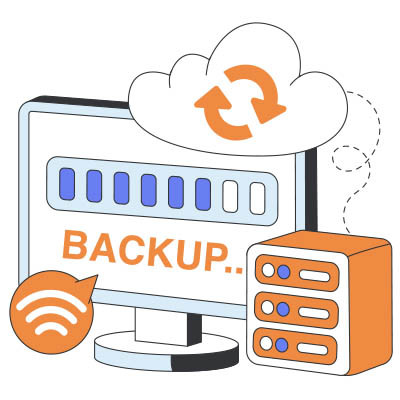
Many business owners assume their company files are completely safe until an unexpected event proves otherwise. Sudden hardware failure, accidental deletion by an employee, or a malicious cyberattack can compromise your files at any moment. Operating without a recovery plan risks everything you have built. If your files disappear tomorrow, your daily operations will halt, and recovering that lost information on your own can be nearly impossible.

You cannot secure a business by simply buying expensive software or new computers. Even massive companies with huge budgets get hacked regularly. True cybersecurity is not a product you buy and forget about. It is a daily habit that involves every single person in your company.

Popular culture gets modern cybercriminals completely wrong. Most people still picture a solo attacker operating out of a dark room. The reality is much more mundane and far more dangerous.
Today, corporate cybercrime groups operate like legitimate businesses. They use structured organizational charts, tracking metrics, customer support lines for victims, and dedicated development budgets.

It is tempting to look at your monthly IT bill and wonder if you could be doing more with less. I see it all the time: a business owner tries to trim the overhead by simplifying their technology. Usually, that starts by letting go of a managed security plan in favor of a basic, off-the-shelf antivirus found online for a few dollars a month.

Ask a handful of IT consultants to explain the cloud, and you’ll likely be met with a blizzard of buzzwords—”scalability,”“elasticity,” and “hybrid infrastructure”—that do very little to help you hit your quarterly goals.
All the noise aside, the cloud isn’t a mystery; it’s simply renting someone else's computer. Instead of maintaining a server box in your broom closet, you are leasing space on high-performance machines owned by giants like Microsoft, Amazon, or Google. They own the hardware; you own the results.
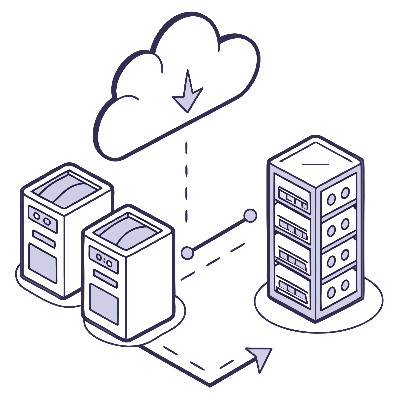
Most business owners I talk to have some form of backup. Maybe it's an external drive plugged into a server, or perhaps everything is saved in the cloud. While these are great starts, they often have a single point of failure. If your office has a fire, that external drive is gone. If a user accidentally deletes a folder and it syncs to the cloud, that data might be gone before you notice.
To make a backup "trustworthy," we use a framework called the 3-2-1-1 Rule. It sounds like a football play, but it’s actually a recipe for peace of mind.

Running a small business is often romanticized as a scrappy adventure, a series of late nights and breakthroughs, but anyone actually in the trenches knows it’s more like trying to repair a plane while it’s hurtling through the air at thirty thousand feet than it is a pleasant stroll in the park.

Most business owners view their IT the same way they view their utilities: they only notice it when the connection drops or a system fails. However, in an era where your digital infrastructure is the backbone of your entire operation, waiting for something to break before you address it is risky.

It’s easy to fall into the trap that you have to be the entire C-Suite for your business all in one. You should be running your business, not managing its IT infrastructure, and trying to do it all will only pull your focus away from what matters most. Instead of worrying about endless security threats, unpredictable technology costs, and countless tech support questions, you should work with a managed IT provider.

It’s easy in IT to see a large IT invoice and think something needs to be done about it, but have you ever stopped to think about how much lost productivity is costing your business? Chances are, it’s even more than what it costs to receive IT support. Today, we’re exploring this invisible tax you pay due to poor IT performance (and what you can do to stop it).
Is your business technology a source of uncertainty and frustration? Are you constantly reacting to IT problems when you would prefer to proactively leverage technology to drive your business’ growth? This struggle is often the result of the Executive IT Gap, a phenomenon that traps businesses in an endless cycle of reactive, costly, and inefficient technology decisions that slow down growth.

As someone who works with technology every day, I’ve seen the magic it can bring to a business. I’ve also seen the headaches and the hidden costs that can harm its efforts. If you own a business, you might think of IT as just the Wi-Fi or the guy who fixes the printer. I’m here to tell you that mindset will cost you dearly. I want to share four uncomfortable, non-technical truths that every practical business owner needs to accept about their technology.

A significant and growing number of small businesses are either actively using AI tools or exploring their potential, motivated by the promise of increased efficiency, cost savings, and gaining a competitive edge.
It's an exciting movement, proving that AI isn't just for huge mega corporations. Small businesses are using AI for everything from generating marketing content and handling customer service inquiries with chatbots to analyzing customer data and automating back-office tasks. The goal is to compete faster and smarter.

Small and medium-sized businesses are continuously grappling with the complexities of their supply chain. If you're trying to compete with industry giants, the right technology is more accessible and affordable than ever. This month, we will go into some of the ways you can make your supply chain more efficient.

Many business owners, especially those running small or medium-sized enterprises and even startups, often wonder if their company is big enough to justify investing in managed IT services. The common misconception is that outsourced IT support is only for larger businesses with complex networks and hundreds of employees. The fact is that there is no minimum size a business must reach to significantly benefit from managed IT services.
News & Updates
The Connection, Inc. Celebrates 32 Years as a Trusted Technology Provider! Since our founding in 1992, technology and the way we operate and do business has changed a lot. Companies that have adapted and aligned themselves with ...
Understanding IT
Get the Knowledge You Need to Make IT Decisions
Technology is constantly evolving, and keeping up can feel overwhelming. Whether you want to understand cybersecurity threats, explore automation, or learn how regulations like PCI DSS impact your business, we’ve made it easy to access clear, straightforward insights on key IT topics.
Contact Us
Learn more about what The Connection can do for your business.
The Connection
51 Village CT
Hazlet, New Jersey 07730