
The Connection, Inc Blog
The Connection, Inc has been serving the New Jersey area since 1992, providing IT Support such as technical helpdesk support, computer support and consulting to small and medium-sized businesses.


A laptop keyboard collects crumbs, finger oils, and dust faster than a breakroom counter collects forgotten mugs. Most people wait until their screen looks like a thumbprinted crime scene before grabbing a random paper towel and whatever glass cleaner is sitting under the sink. That is a quick way to turn a functional $1,200 workstation into an extraordinarily expensive paperweight.
0 Comments

If you have noticed your software bills climbing as your team adopts more artificial intelligence tools, you are not imagining things. Most business owners expect tech subscriptions to carry a predictable, flat monthly rate per user. With many AI platforms, however, your actual bill is tied to a unit of measurement that few non-technical managers fully understand: the token.
Understanding how tokens work is not just a piece of trivia for your IT department. It is essential for keeping your technology overhead predictable and making sure your AI investments actually deliver a positive return.

Microsoft has not announced Windows 12, and that is actually great news for your business. Rather than forcing companies into another disruptive operating system migration, Microsoft is shifting its focus toward system stability, security, and incremental updates to Windows 11.

Operating a business without centralized data requires making critical decisions based on guesswork rather than concrete facts. Achieving operational visibility does not require investing in expensive, disruptive software applications. Instead, it relies on deploying specific technology infrastructure to unify financial, logistical, and team performance data into a single view.

Business technology budgets often contain hidden expenses that have nothing to do with hardware upgrades or cyber threats. This waste usually sits quietly in a digital folder, buried inside software and service agreements. Business owners often sign these agreements to get setup moving quickly, then completely forget about them.
Actively managing these legal agreements is one of the easiest ways to protect your operational cash flow. Let us look at the specific terms that cause the most trouble and how you can take control of them.

Getting ahead of the competition in terms of business technology is rarely about having the largest budget or deploying the newest software platforms. Technology is a business expense that only yields a return when it actively improves operational efficiency.
To gain a distinct advantage, organizations must focus on optimizing operations, securing infrastructure, and properly training staff. Here are five core strategies required to outperform competing organizations through better technology management.

Today, too many businesses operate without a digital dashboard, running their critical technology infrastructure until it falls apart. There is a massive chasm between hiring a reactive "IT guy" to rescue a jammed printer and partnering with a strategic technology visionary. Instead of viewing your technology as a frustrating black hole where capital goes to die, it’s time to convert those persistent IT headaches into genuine business acceleration.

Every few years, business owners face a familiar dilemma. Computers slow down, teams complain about software lag, and inboxes flood with alerts about the latest cybersecurity threats. The standard industry response is to throw money at the problem by upgrading every laptop, migrating files to premium cloud tiers, and buying a stack of shiny software licenses.
Buying more technology often introduces more complexity, more user frustration, and more security holes. True sustainability happens when a business maximizes the tools it already owns, secures them properly, and includes staff in the conversation. It is entirely possible to balance productivity and security without overcomplicating operations or emptying the bank account.

When you open new offices or hire people to work from home, your computer needs completely change. A setup that works great for one office usually falls apart when you add a second or third location.
Without a central plan, businesses end up with split data, slow connections, and security gaps. It is a common breaking point for growing companies that rely on systems built for a single office.

The way businesses use technology has completely changed over the last ten or fifteen years. Organizations have transitioned from localized physical machines to running entire operations on a distributed digital network. Yet, a lot of business owners are still stuck with an IT framework left over from 2010.

Multi-factor authentication (MFA) is necessary for business security. However, relying on text messages to deliver verification codes creates a significant vulnerability that cybercriminals regularly exploit.
To secure business data, organizations must phase out SMS-based authentication and transition to more resilient verification methods.

Business owners often make technology investments in a vacuum. You look at the metrics, you see the potential return on investment, and you purchase the platform. Two months later, everyone is still quietly reverting back to their old spreadsheets. You might want to mandate the new software and lock down the old files, but mandating the platform is not the core issue. The problem is that your team does not see the tool as a way to make their workdays easier.

How much does a 5-second lag on your technology cost? Most business owners will look at an aging laptop and think, “It still works, so why replace it?” The reality is that older devices can lead to a silent, invisible drain on your budget that doesn’t show up on the hardware invoice: the labor leak.

It is tempting to look at your monthly IT bill and wonder if you could be doing more with less. I see it all the time: a business owner tries to trim the overhead by simplifying their technology. Usually, that starts by letting go of a managed security plan in favor of a basic, off-the-shelf antivirus found online for a few dollars a month.

We’ve all seen the headlines about what AI can do; it can write your emails, analyze your spreadsheets, and even generate art in seconds. But we rarely talk about what it takes to make that happen. When you ask a chatbot a question, you aren't just tapping into a "brain" in the cloud; you are triggering a massive, physical chain reaction of resource consumption.

When you think of business technology, what’s the impression you get? Do you look at it as a pain in the neck obligation, an unavoidable cost, or one of your most valuable assets?
For many, it is the former… but for the most successful among us, it is the latter. Let’s talk about how you can use your technology to optimize your incoming cash flow.
As your team expands, so does your digital footprint. Managing who has access to your company’s financial records, customer data, and internal systems quickly shifts from a simple task to a significant liability that takes time and effort to manage.
Without a centralized strategy, your business becomes vulnerable to a lot of problematic situations. This occurs when employees accumulate access rights over time, often retaining permissions from previous roles or temporary projects that they no longer need. This simple problem actually creates security holes in your network and increases the risk of a data breach that could compromise your reputation and your revenue.

There is a dangerous phrase that often precedes a crisis: “...But it is still working fine.”
Viewing technology as a one-time purchase or a fix-it-when-it-breaks utility is a recipe for stagnation. If you are not consistently investing in your digital infrastructure, you are not just standing still; you are falling behind. This lack of movement creates a widening gap between your capabilities and the expectations of the people that depend on your business.

Nowadays, technology isn't just a tool in the background, it is the heart of how you make money and serve customers. However, as things like AI and cloud storage become easier to buy, it also becomes easier to make expensive mistakes.
Here is a guide to the five biggest technology traps businesses are falling into right now and how you can stay safe.
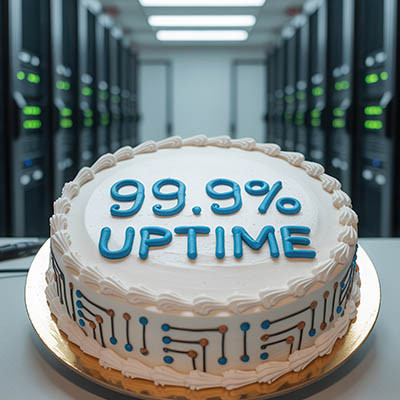
Project yourself one whole year from today. Now imagine that you’ve maintained 99.9 percent uptime for the entire year. What would a year of relentless, focused expansion do for your business compared to having your progress stymied at every turn by constantly fighting with your technology?
News & Updates
The Connection, Inc. Celebrates 32 Years as a Trusted Technology Provider! Since our founding in 1992, technology and the way we operate and do business has changed a lot. Companies that have adapted and aligned themselves with ...
Understanding IT
Get the Knowledge You Need to Make IT Decisions
Technology is constantly evolving, and keeping up can feel overwhelming. Whether you want to understand cybersecurity threats, explore automation, or learn how regulations like PCI DSS impact your business, we’ve made it easy to access clear, straightforward insights on key IT topics.
Contact Us
Learn more about what The Connection can do for your business.
The Connection
51 Village CT
Hazlet, New Jersey 07730