
The Connection, Inc Blog
The Connection, Inc has been serving the New Jersey area since 1992, providing IT Support such as technical helpdesk support, computer support and consulting to small and medium-sized businesses.

Have you ever reached for your phone to check a quick notification, only to look up forty minutes later feeling drained, agitated, and behind on your schedule? For a business owner, this is more than just a bad habit, it’s a thief. While you are busy protecting your revenue and managing your team, these habits serve as an invisible tax on your focus.
0 Comments

You've heard the grumbling, seen the memes, and probably even felt it yourself: that vague, all-powerful entity known as the algorithm. It's blamed for everything from political polarization to your inexplicable obsession with people eating military rations. What exactly is it, and what digital giants are pulling its strings?
We all have too many accounts nowadays. Between our personal lives, work, and practically all the entertainment we consume, there are dozens to keep track of and manage… and then there are the ones that charge us for a service they offer. The stacking costs of these services are bad enough, but if you see them start to double or even triple in a given month, you may be experiencing a common problem that is simple enough to solve.
To do so, we need to clarify the difference between creating an account and logging in.

For years, Facebook was the undisputed king for businesses seeking online engagement. Its massive user base offered unparalleled reach, connecting companies with billions globally. Sophisticated tools allowed precise audience targeting based on demographics, interests, and behaviors. Businesses effectively built brands, fostered communities through direct interaction in comments and groups, drove website traffic, and even handled customer service, often benefiting from significant organic visibility.
However, as time has passed, the landscape has dramatically shifted.
You don’t want to get spammed; nobody does. Unfortunately, it happens to EVERYONE, and it’s just getting worse. All this unwelcome correspondence happens over the phone, through email, and especially on social media. In today’s blog, we’ll talk a little bit about how social media puts users at risk and what you can do to keep that risk from becoming a problem for you.
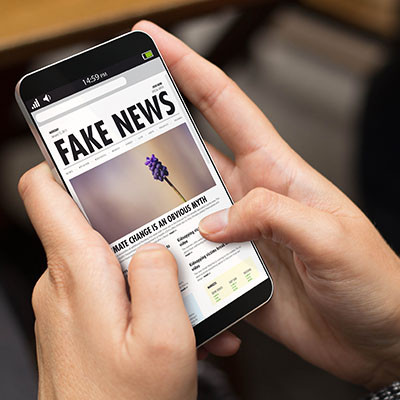
All it takes is a couple minutes on social media to see all of the “outrage” over whatever is happening in the world at the moment. Before you know it, you’re invested in some issue that you’ve never heard of up until that moment, and you’re left wondering, “Why?” Today, we want to explore this phenomenon of how social media brings you to care so deeply about things that are rarely actually your problem (and why it can be so harmful).

Funerals are never to be taken lightly, which makes it all the worse that there are people out there willing to use these events to scam those in grief. Recently, Facebook has seen many groups that supposedly offer links to streamed funerals in exchange for credit card data, with different events being added more recently.

Sorry for the loaded title. There’s a lot to talk about, even for those of you who don’t use or even know what Telegram is.
We’ll try to sum this up, because we think there is a lot to say about security and the nature of technology in this, and like all things these days, there’s some odd rabble-rousing about this whole series of events. Who’s up for a wild ride?
Last week we went through some of the issues that Facebook is dealing with in regards to its security and data privacy. Today, we thought it would be helpful to give you the tools you need to protect your privacy on Facebook.

Maintaining data security is an important consideration, and most people try to do what they must to secure their personal data. They verify emails; they roll out antivirus and antimalware; they take vigilant steps to avoid the myriad of threats and active attacks we all deal with from one day to the next.

Social media scams are fraudulent schemes or deceptive activities that take place on various social media platforms. Users of Facebook, X (formerly Twitter), LinkedIn, and dozens of others have been victims of these attacks. These scams can target users of all ages and backgrounds, and they aim to exploit people's trust, curiosity, or lack of awareness. Social media scams come in various forms, and here are some common ones.
Last time, we started our discussion on the best search engines by talking about the behemoth, Google. While Google is, by far, the most popular and commonly used, and arguably the most accurate search engine, it doesn’t mean it’s always the right search engine to use. Let’s talk about some other alternatives and see where they might fit in.
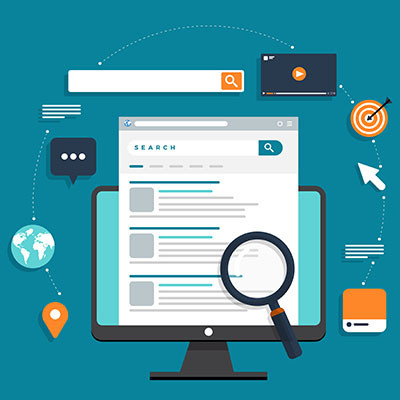
Even if you lived under a rock, you’ve probably done a Google search or two. There are, in fact, other search engines, each with their own pros and cons. We’re going to compare some of the most popular search engines and talk about what makes them different.

Social media is often seen as simply a consumer technology that has limited value to businesses, but you might be surprised by how much proper use of social media can impact it. Here are four benefits your business could potentially see from using social media websites and applications.
It is not an exaggeration to refer to social media as a world-changing technology, impacting life in all manners—interpersonal, social, and professional. We wanted to focus on this last aspect and discuss how social media can assist a business in its operations.

Almost daily there is another data breach reported that exposes data for hundreds of thousands or millions of people. This is a troubling trend. One of the most troubling events happened recently as 700 million profiles from the social media network LinkedIn were found for sale on a popular hackers forum. What’s worse is that the company isn’t admitting that it had been breached recently. Let’s take a brief look at this situation and try to unpack what is going on with LinkedIn.

Nowadays, social media companies have a lot of power and influence, which is part of the reason that so many of today’s largest businesses have adopted social media as a critical promotional tool. With the average person spending about two hours and 24 minutes on social media and messaging applications per day, this makes social media a clear opportunity for any sized business to embrace. Let’s consider a few ways this can be accomplished for these different businesses.

Social media platforms—like Facebook and Instagram—are a great place to communicate with people, as many political campaigns are now taking advantage of. With an election on the horizon, political advertisements abound on these platforms. Of course, not everyone wants their feeds cluttered with these ads… especially if these ads don’t align to their own politics.

Chances are that if you’re using a smartphone, you’ll have your WiFi turned on as often as you possibly can. This helps to keep data hogs (applications that use a ton of your monthly allotted mobile data) at bay. However, not everyone has the convenience of an Internet connection at all times, particularly while you’re out of the office. Here’s how you can limit the damage done by your favorite smartphone apps.
Cyber security professionals and Internet users rejoice, for the “Spam King,” Sanford Wallace, has finally been sentenced for his longtime use of stolen Facebook credentials to spam other users. Between 2008 and 2009, he had stolen credentials for Facebook accounts, and then used the accounts to send credential-stealing web links. Now, he gets to spend the next two and a half years in prison, and pay an oddly-specific fine of $310,629.
News & Updates
The Connection, Inc. Celebrates 32 Years as a Trusted Technology Provider! Since our founding in 1992, technology and the way we operate and do business has changed a lot. Companies that have adapted and aligned themselves with ...
Understanding IT
Get the Knowledge You Need to Make IT Decisions
Technology is constantly evolving, and keeping up can feel overwhelming. Whether you want to understand cybersecurity threats, explore automation, or learn how regulations like PCI DSS impact your business, we’ve made it easy to access clear, straightforward insights on key IT topics.
Contact Us
Learn more about what The Connection can do for your business.
The Connection
51 Village CT
Hazlet, New Jersey 07730