
The Connection, Inc Blog
The Connection, Inc has been serving the New Jersey area since 1992, providing IT Support such as technical helpdesk support, computer support and consulting to small and medium-sized businesses.


Major technology projects frequently run over budget and fail to deliver on their original promises. When your internal IT staff is overwhelmed by daily troubleshooting, high-value infrastructure upgrades grind to a halt and crash and burn; and, with them all the capital you’ve invested in them. Co-managed IT provides the targeted resources needed to bring these critical investments across the finish line.
0 Comments

Generative AI tools offer tremendous potential for daily workplace efficiency, but using them without proper guardrails yields inaccurate work and serious data privacy risks. When employees learn how to prompt these tools responsibly, team operations run smoothly without compromising critical organizational security.

October is Cybersecurity Awareness Month, so there’s hardly a better time to talk about the harsh realities of devastating ransomware attacks or other business IT failures… malicious or benign. While updating passwords and enabling two-factor authentication are critical first steps, your last line of defense is always a bulletproof recovery strategy—starting with the 3-2-1-1 backup rule.

Running a business requires strategic leadership, consistent execution, and efficient resource allocation, yet daily operations are frequently derailed by a cumulative build-up of minor technical inefficiencies. While major economic shifts or financial setbacks command executive attention, the steady stream of recurring system errors, administrative friction, and security vulnerabilities subtly degrades workplace productivity and diverts leadership focus away from core growth initiatives.
Resolving these operational bottlenecks requires identifying the primary technical challenges that impair organizations every week.

Repetitive daily operations and administrative tasks can slow down even the most dedicated workforce, leading to burnout and delayed milestones. Introducing game mechanics into standard business processes provides immediate feedback and clear rewards for routine execution.
When work feels engaging, friction drops significantly.

Most business owners treat technology as a basic utility bill to keep as low as possible. However, sluggish hardware and fragmented tools quietly consume productive employee hours every single day.
Neglecting your infrastructure does not save money; it imposes an unrecorded tax on your overall payroll.

Traditional office perimeters no longer protect modern networks now that many staff members are free to log in from home or local coffee shops. Granting automatic network access based on physical location creates quiet vulnerabilities that bad actors exploit daily.
This is exactly why verifying every identity and endpoint is so essential for anyone in business today: it safeguards your entire organization.

Small businesses miss out on lucrative enterprise contracts every single day, and it rarely has anything to do with the quality of their work. The deal usually grinds to a halt the moment a prospective corporate client hands over a 50-page vendor security questionnaire. Let's talk about how you can prepare your business to pass these audits with confidence.

Microsoft has not announced Windows 12, and that is actually great news for your business. Rather than forcing companies into another disruptive operating system migration, Microsoft is shifting its focus toward system stability, security, and incremental updates to Windows 11.
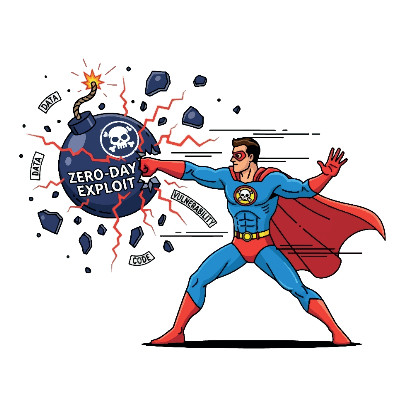
When a massive software vulnerability hits the news…we’re talking about ones that threaten infrastructure, supply chains, or businesses globally…it often feels like an uncontrollable wildfire. The public might panic, but what you don’t see is the quiet, behind-the-scenes work that goes into addressing these issues before they reach your business.
These days, the window of time between a vulnerability being discovered and hackers exploiting it is smaller than ever, and if you wait before taking action, it could cost you your business.

Managing dozens or hundreds of online business accounts requires a realistic security strategy. For years, standard IT policy demanded complex, highly randomized passwords that changed every few months. This approach backfired, leading to recycled password variations and severe security vulnerabilities across organizations.
It is time to discard outdated password rules. Modern password logic focuses on usable security that protects company data without creating operational friction for employees.

Modern cybercriminals have shifted their tactics. Instead of immediately encrypting live production servers, sophisticated attackers now quietly compromise secondary backup archives first; stripping away your ability to restore systems independently. If your enterprise data configurations allow backup logs or files to be altered or deleted, a single breach can permanently destroy your operational records and force costly, catastrophic downtime.

It can feel like every phone call, text message, and email is an attempt to steal money or compromise your network. Scammers target individuals and organizations constantly, using increasingly refined tactics.
While you cannot stop bad actors from sending fraudulent messages, you can implement simple controls to reduce risk. Here are four practical steps you can take to protect yourself and your organization.

A main server hardware failure right before a critical business event can stop operations entirely. In a traditional reactive IT setup, a dead server means waiting days or weeks for new hardware, re-installing applications, and attempting to restore data from manual backups.
With a proactive data resilience strategy, that same hardware failure becomes a minor temporary shift rather than a business disaster.

We all like to think we have a solid handle on our day-to-day operations, but technology has a sneaky way of creating blind spots. Even well-intentioned leaders occasionally fall into simple traps that put their operations at risk. Let’s look at a few of the most easily avoidable IT mistakes and how you can fix them today.

Imagine investing thousands of dollars into a sleek, state-of-the-art software platform designed to eliminate operational chaos and boost productivity, only to discover six months later that your staff is quietly relying on sticky notes and secret spreadsheets just to complete their daily tasks. It is a scenario played out in businesses everywhere, every day, but this resistance to new tools isn't a modern phenomenon.
When technology additions fail to deliver results, the software itself is rarely the problem. Most often, the failure stems from treating a deeply human transition as if it were a simple software installation.
In architecture and engineering, shortcuts often end in spectacular failure. Consider the Tacoma Narrows Bridge: first opened in 1940, engineers had shortened the deck design to save time and weight. The bridge—famously nicknamed "Galloping Gertie"—swayed violently in moderate winds until it ultimately collapsed.
Similarly, in business IT, taking quick shortcuts feels harmless at first, but it creates hidden structural vulnerabilities beneath your day-to-day operations. While cutting corners might save a few minutes today, it routinely compromises long-term security and stability.

Whether you’re a business owner or office worker, you probably manage dozens of different online accounts just to get through your workweek. Yet, security best practices say you're expected to have a completely unique, complex password for every single one of them. What usually happens instead? You end up playing password roulette. You try your standard password, then the version with an exclamation point, then the one with your dog's birthday.
Before you know it, you are locked out of your account and forced to hit "Forgot Password" for the third time this week; just to log into a basic utility you use every single day. It’s frustrating, it eats up precious time, and it leads to bad habits like re-using weak passwords or storing them on sticky notes stuck to your monitor. Don’t worry… there is a better way.

Many technology vendors use the word “proactive” as a marketing buzzword without actually changing how they deliver their services. When your business seeks an external provider, you must look beyond standard sales promises to evaluate their actual infrastructure and reporting habits.

Building an effective home office gets expensive fast, but spending thousands on flashy hardware rarely solves productivity problems. Creating a functional workspace is about eliminating daily friction so you and your team can focus on getting work done.
Here are six practical strategies to build a reliable home office without burning through your budget.
News & Updates
The Connection, Inc. Celebrates 32 Years as a Trusted Technology Provider! Since our founding in 1992, technology and the way we operate and do business has changed a lot. Companies that have adapted and aligned themselves with ...
Understanding IT
Get the Knowledge You Need to Make IT Decisions
Technology is constantly evolving, and keeping up can feel overwhelming. Whether you want to understand cybersecurity threats, explore automation, or learn how regulations like PCI DSS impact your business, we’ve made it easy to access clear, straightforward insights on key IT topics.
Contact Us
Learn more about what The Connection can do for your business.
The Connection
51 Village CT
Hazlet, New Jersey 07730